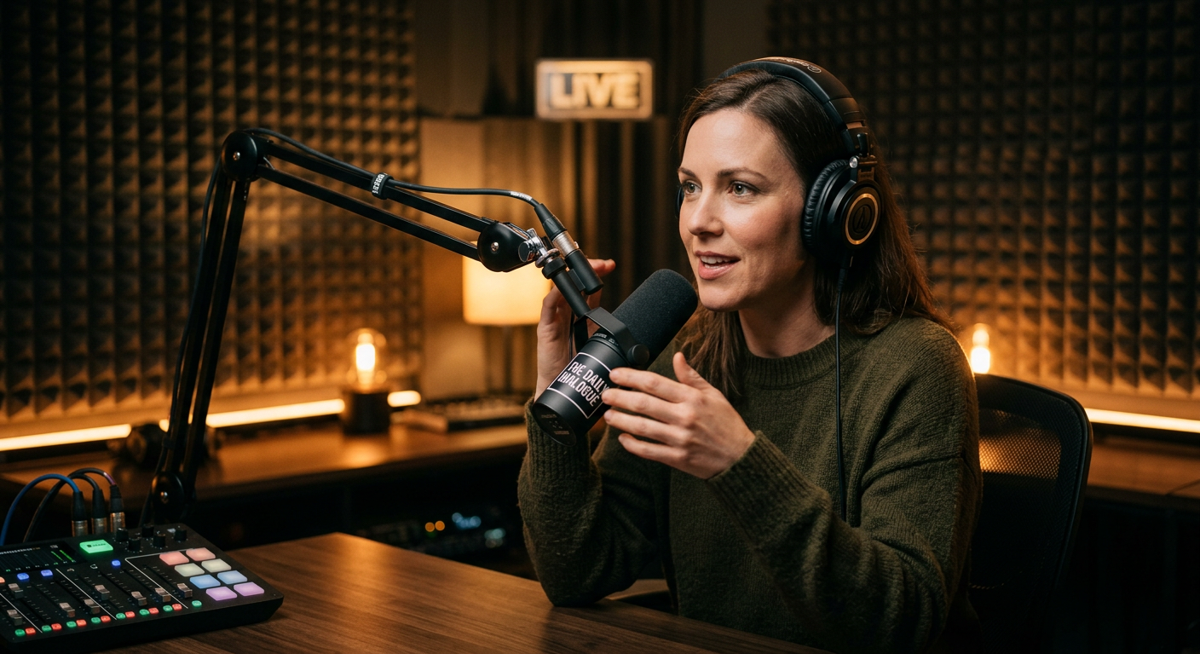
Best UGC Practices for Brands in 2026: Should You Use AI, and Must You Disclose It?
User-generated content still converts better than polished brand ads, but the rules changed underneath it. Here is how to run UGC in 2026, when to use AI, and exactly what the law now requires you to disclose.

The Creator Economy
Editorial oversight by the Editor-in-Chief
User-generated content remains one of the highest-converting formats in a brand's toolkit, precisely because it does not look like advertising. It looks like a real person, in a real setting, telling you something true. That authenticity is the entire value, and it is also exactly what makes 2026's compliance landscape so consequential. Because the moment AI enters the production of UGC, and it now enters most of it, the question of what counts as authentic, and what a brand is legally required to tell you, stops being philosophical and becomes a matter of dollars-per-violation.
Here is how to run UGC well in 2026, the honest answer on whether to use AI, and a precise account of what you must disclose.
The fundamentals still win
Before the AI question, the basics that make UGC work have not changed, and skipping them is still the most common failure. Great UGC starts with a clear brief, not a loose ask. The creators who deliver are the ones who understand the product, the audience, and the single message the piece needs to land. It is native to the platform, shot vertically for short-form feeds, paced for the first three seconds, and built around a genuine hook rather than a scripted pitch. It centers a real use case over a feature list. And it is sourced from creators whose audience actually overlaps with your buyer, not whoever has the largest follower count.
The brands that win at UGC in 2026 treat it as a system, not a one-off. They build a repeatable brief template, a roster of vetted creators, a rights-and-licensing process locked down before anything goes live, and a disclosure standard baked into every brief rather than bolted on after a complaint. That last item is where most of the risk now lives.
Should you use AI in UGC?
The short answer is yes, selectively, and with clear eyes about where it helps and where it destroys the thing that makes UGC valuable.
AI is genuinely useful across the top of the UGC funnel. It accelerates creator discovery and vetting, drafts and personalizes briefs at scale, generates first-pass concepts and hooks, and speeds up editing and repurposing of footage across formats. Roughly six in ten marketers now use some form of AI when producing or repurposing UGC for paid social. Used this way, as an accelerant on research, ideation, and post-production, AI is a straightforward efficiency win with limited downside.
The harder question is fully synthetic UGC: AI-generated personas describing product benefits, AI-written reviews, composite testimonials that stitch real feedback into a synthetic narrative, and virtual influencers that now occupy a real line in ad budgets. This is where brands need to be deliberate, for two reasons. The first is strategic. The entire premise of UGC is that a real person had a real experience. A fully synthetic testimonial is, at its core, a brand claim dressed up as an independent voice, and audiences are getting better at sensing the difference, with a majority of consumers reporting they can no longer reliably tell AI content from human content, which cuts against trust in both directions. The second reason is legal, and it is now specific and expensive.
What you must disclose in 2026
This is the part brands get wrong, so it is worth being exact. There are two separate disclosure obligations, and AI-generated UGC in a sponsored context can trigger both at once.
The first is the material connection. If there is a paid or incentivized relationship between the brand and the person or entity posting, that relationship must be disclosed clearly and conspicuously. This is long-standing FTC endorsement law, substantially tightened in the 2023 revision of the Endorsement Guides, the first major update since 2009. That revision added a formal definition of clear and conspicuous, expanded the definition of an endorsement to cover tagged posts and virtual influencers, and made explicit that advertisers, endorsers, and intermediaries such as agencies and PR firms can all be held liable. You cannot outsource this risk to your agency. If your agency runs a non-compliant campaign, the brand remains on the hook.
The second is the AI involvement itself. Under the FTC's current standard, disclosure is required whenever the nature of a communication would not be clear to a reasonable consumer without it. In practice, that means when material creative elements, voiceovers, visuals, scripts, or synthetic likenesses, were generated by AI, a generic ad tag is no longer sufficient. The FTC has specifically called out AI influencers as requiring the same disclosure as paid human endorsers, plus the additional disclosure that the persona is AI-generated. The agency has not mandated exact wording, but prominent, plain-language labels like AI-generated or AI-assisted content, placed within the asset rather than buried in hashtags or fine print, are far more defensible than vague phrasing like produced with technology.
Placement is not a detail, it is the compliance. A disclosure that technically exists but sits below the caption fold, or after the first three seconds of a short-form video, or lost in a stack of hashtags, does not meet the clear-and-conspicuous standard. For short-form video, the working expectation is a verbal or on-screen disclosure early, within the opening seconds, in text large enough to read and not obscured. For static posts, it belongs in the first line, before any truncation point. On platforms without a native paid-partnership label, the disclosure goes at the very top of the post.
The stakes are not theoretical. The FTC's maximum civil penalty for a knowing endorsement-guide violation runs above 50,000 dollars per violation, and each post can count as a separate violation. On top of the federal rules, New York's first-in-the-nation synthetic-performer law took effect June 9, 2026, with its own penalties for undisclosed use of covered synthetic performers in advertising, and EU obligations under the AI Act's Article 50 apply to EU-facing work from August 2, 2026. If your ads reach New York or Europe, and most do, assume the strictest applicable standard.
The 2026 UGC playbook, in short
Put together, the guidance for brands running UGC this year is straightforward even if the rules underneath it are not.
Keep the fundamentals: sharp briefs, platform-native execution, real use cases, and creators whose audience matches your buyer. Use AI where it accelerates without deceiving, discovery, briefing, ideation, editing, and repurposing, and treat it as a tool that makes human-led content faster rather than a replacement for the human at the center. When you do use fully synthetic content or AI-assisted material in sponsored contexts, disclose both the paid relationship and the AI involvement, in plain language, placed where a reasonable person will actually see it before deciding what to think.
The brands that will win with UGC in 2026 are not the ones that avoid AI, nor the ones that use it to quietly manufacture fake authenticity. They are the ones that use AI to move faster while being transparent about it, because in a landscape where consumers can no longer tell what is real, the brand that tells them the truth is the one that keeps their trust. And trust, not follower count and not production polish, is what makes UGC convert in the first place.
Treat disclosure as a default, not an exception. Build it into your brief template now. It is far cheaper than retrofitting it after a complaint, and in 2026, the complaints come with dollar figures attached.

By The Creator Economy Editorial Team
Editorial oversight by Ismail Oyekan
Ismail Oyekan is the Editor-in-Chief of The Creator Economy and the founder of IMCX (Influencer Marketing Conference & Expo), the premier industry gathering connecting creators, brands, and capital. Named one of the 100 Most Influential People in Influencer Marketing by Influence Weekly, he has managed over $20 million in influencer marketing budgets and worked with A-list talent including Floyd Mayweather and DJ Khaled. He is a sought-after advisor to creator economy startups.