Khloud Raises $15M as Protein Snacks Become the CPG Category Every Celebrity Founder Wants In On
Khloé Kardashian's protein snack brand pulled a $15M round led by K5 Global with Serena Ventures, WME, Shrug Capital, and Springdale Ventures — and walked into Target, Walmart, and Starbucks in roughly a year.

The Creator Economy
Editorial oversight by the Editor-in-Chief
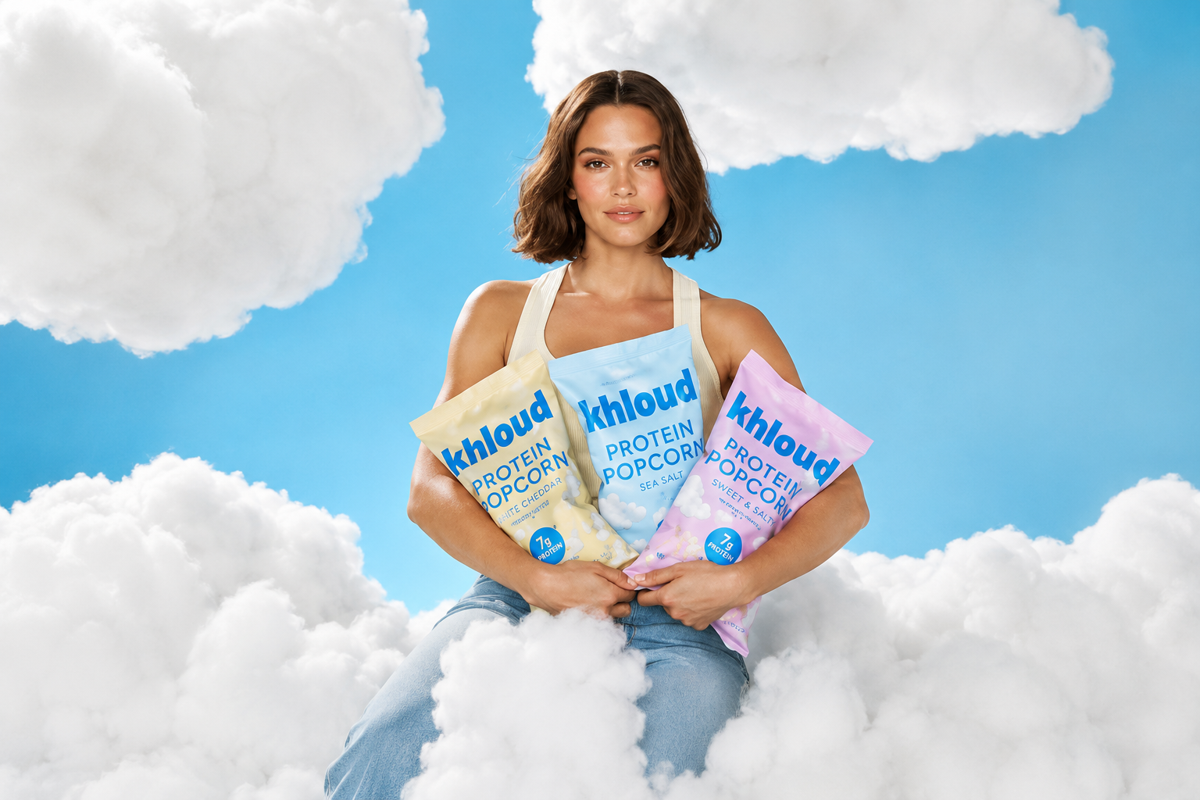
Khloud, the protein snack brand founded by Khloé Kardashian, has closed a $15 million round led by K5 Global, with participation from Serena Ventures, WME, Shrug Capital, and Springdale Ventures. The brand launched in April 2025 with a protein popcorn product, expanded into protein chips, and has already secured distribution at Target, Walmart, and Starbucks — three of the four most strategically valuable shelves in American CPG.
That cap-table reads like a deliberate construction. K5 Global, the multi-stage investor backing Brex, Anthropic, and Stripe, doesn't typically write checks into celebrity snack brands unless the unit economics and velocity data are telling a real CPG growth story. Serena Ventures has been one of the more disciplined consumer investors in the creator-economy era, with portfolio companies like Tonal, Daily Harvest, and Esusu. WME's strategic check is the celebrity-talent-meets-distribution piece. Shrug and Springdale are CPG-native funds that don't take meetings unless the numbers move.
The combination is the part worth paying attention to. A $15M Series A in the celebrity CPG space in 2026 is not a vanity round. It signals that Khloud has cleared the velocity bar at one or more major retailers and that the investors believe the brand can compound across categories — from popcorn to chips to whatever the next launch is — without leaning entirely on Khloé Kardashian's personal media flywheel to drive every unit.
The category context matters. Protein snacks have become the most competitive sub-category in CPG entering 2026. David Protein raised $75M last year at a $725M valuation off the back of a protein bar built around a single-ingredient credibility story. Quest, Built Bar, and Optimum Nutrition are defending shelf space with aggressive promotions. Magic Spoon expanded from cereal into puffs and treats. The thesis underneath all of them is the same: protein is no longer a fitness-adjacent claim, it's the new low-fat, low-carb, or low-sugar — a horizontal trend the entire packaged-snacks aisle is rebuilding around.
Khloud is playing inside that thesis with a structural advantage no DTC-first protein brand has: instant retail acceptance. A new protein snack brand without celebrity backing typically spends 18-24 months building DTC velocity, then pitching wholesale buyers on data. Khloud went straight to Target, Walmart, and Starbucks in the launch window. Starbucks in particular is interesting — the chain is one of the hardest wholesale wins in American foodservice, with a buying process that takes years for most brands. Securing a Starbucks placement inside year one is a signal that the velocity at Target and Walmart was good enough to put Khloud in front of buyers who normally don't even take meetings with year-one brands.
The naming choice is the second thing to watch. Khloud is name-adjacent — clearly built off "Khloé" — but it's not "Khloé's Snacks" or "Kardashian Foods." The name is far enough from the founder that the brand has at least the architectural option to grow into its own identity over time. That separation is what makes a future exit possible. SKIMS works as a brand without Kim Kardashian in every press cycle. Rhode worked as a brand without Hailey Bieber in every press cycle, which is exactly why e.l.f. paid a billion dollars for it. The brands that get acquired at clean multiples are the ones that built brand equity independent of the founder's name. Khloud is named in a way that keeps that option open.
The risk Khloud is taking is the same risk every protein brand is taking: the category is consolidating fast, the shelf is crowded, and the consumer's protein attention span is being pulled in a dozen directions every month. Operating against that is the fact that the brand is already in three of the four retailers that matter, has a $15M warchest from investors who don't write soft checks, and has a celebrity founder whose Instagram reach guarantees the marketing line item never needs to find new awareness.
The $15M is not the headline. The cap table is. K5 Global plus Serena Ventures plus Shrug plus Springdale is the kind of investor stack that suggests Khloud is being built to either get acquired by one of the snacks majors — Mondelez, PepsiCo, General Mills, Hershey — in the next three to five years, or to scale into a multi-category snacks brand with platform-level economics. Both outcomes are possible. Either outcome would put Khloud well into the small list of celebrity-founded CPG brands that actually became real businesses.
The brands that did — SKIMS, Rhode, Feastables, Alani Nu — share more than just a famous founder. They share investor discipline, operating teams that knew their categories cold, and a brand identity built to outlive whatever happens to the celebrity on the cap table. Khloud's $15M round suggests it is being built inside that same model. The next 18 months of velocity data — and the next round, if and when it comes — will determine whether the model holds.
- Round participants: K5 Global, Serena Ventures, WME, Shrug Capital, Springdale Ventures.
By The Creator Economy Editorial Team
Editorial oversight by Ismail Oyekan
Ismail Oyekan is the Editor-in-Chief of The Creator Economy and the founder of IMCX (Influencer Marketing Conference & Expo), the premier industry gathering connecting creators, brands, and capital. Named one of the 100 Most Influential People in Influencer Marketing by Influence Weekly, he has managed over $20 million in influencer marketing budgets and worked with A-list talent including Floyd Mayweather and DJ Khaled. He is a sought-after advisor to creator economy startups.