Gordon Ramsay's Krude Bets That a Chef-Named Olive Oil Can Take the Premium EVOO Category Out of Bottle-Cap Branding
The Hell's Kitchen host's first packaged-goods launch is a seven-SKU premium olive oil line built with the Soho House wine team — and a case study in why the smartest celebrity brands no longer carry the celebrity's name.

The Creator Economy
Editorial oversight by the Editor-in-Chief
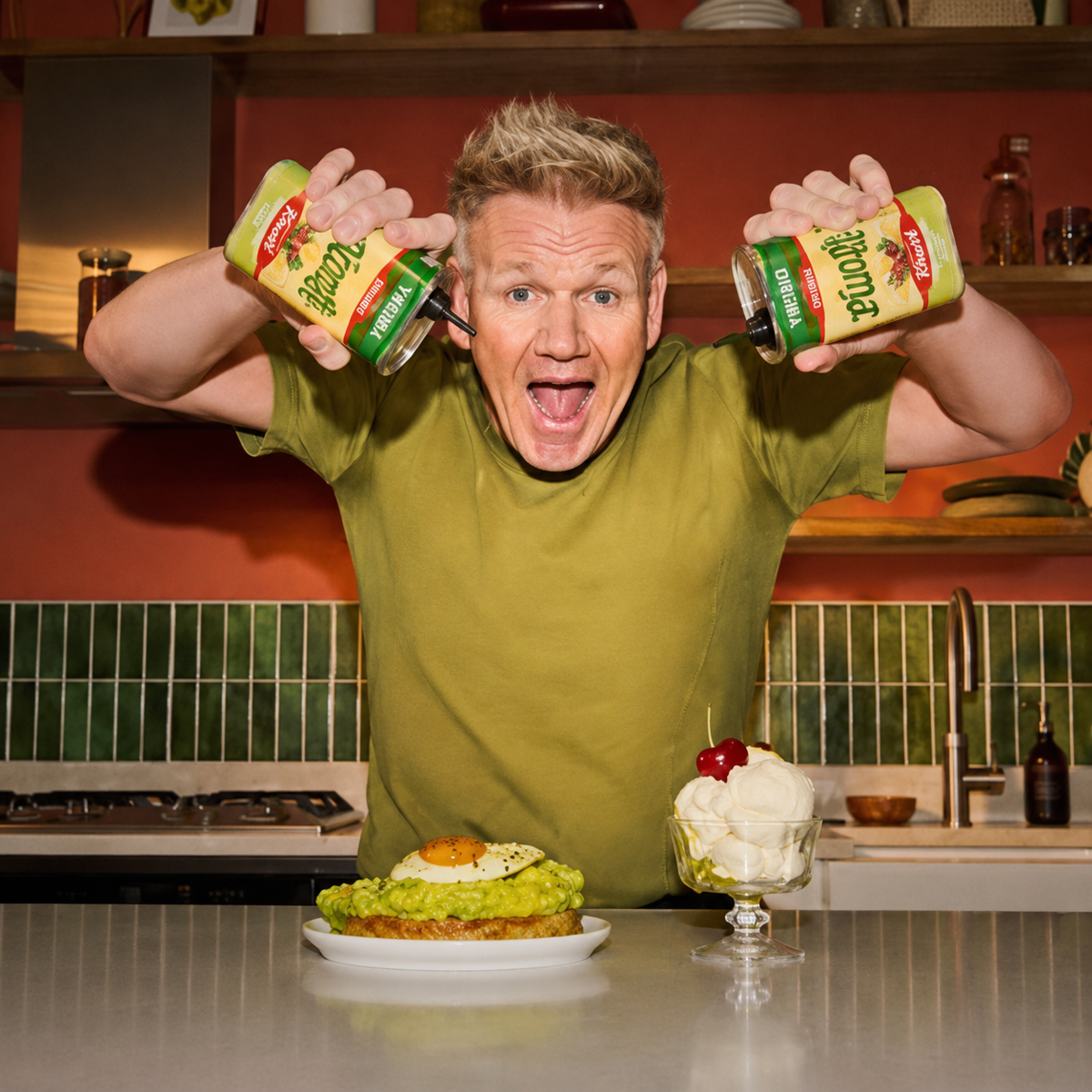
Gordon Ramsay has co-founded Krude, a premium olive oil brand that debuted on May 21, 2026 with a seven-SKU launch — four infused extra virgin olive oils in chilli, garlic, lemon, and basil, plus two uninfused oils built specifically for cooking and finishing. The chef is launching the brand alongside Ben and Elle Caring, the British hospitality couple behind Lady A, the Soho House wine label that quietly became one of the more credible celebrity-adjacent beverage brands of the last decade.
For a chef with Ramsay's profile, the most interesting move is what's not on the bottle. The brand is called Krude. Not Ramsay's. Not Hell's Kitchen Extra Virgin. Not Gordon's. Krude. That naming choice is the entire thesis of the launch, and it puts Ramsay on the right side of a pattern that has been quietly reshaping how celebrity-founded CPG brands are built and acquired.
The premium olive oil category has been in motion for three years. Graza turned squeeze-bottle EVOO into a kitchen-counter brand. Brightland made design-first olive oil a coastal-aesthetic shorthand. Fly By Jing has shown that a chef-credible founder can carry a pantry brand into mass distribution at a velocity legacy CPG cannot match. What none of them have is the kind of distribution leverage a Gordon Ramsay-fronted brand can generate on day one — and the kind of chef authority that, in olive oil, actually matters at the point of sale.
The Caring partnership is the part that suggests this is a real CPG play and not a licensing deal. Lady A took Soho House's wine credibility and turned it into a wholesale brand that now sells in retailers and restaurants on both sides of the Atlantic without leaning on the Soho House name in marketing. That's the same architecture being deployed here. Krude is being built to stand on the bottle, in retailer planograms, and in editorial coverage on its own — with Ramsay's name doing the work of cold-start awareness rather than the work of long-term brand identity.
That distinction is what separates celebrity brands that exit cleanly from celebrity brands that get permanently tethered to one person's public profile. When e.l.f. Beauty paid roughly $1 billion for Rhode, the acquisition cleared partly because Rhode had built brand equity that existed outside Hailey Bieber's personal platform. When Celsius bought Alani Nu, the same dynamic held — most shoppers couldn't name the fitness creator who built it. Brands that carry the founder's name don't get those clean exits because the founder's future controversies travel with the brand forever. Acquirers price that risk in, or walk away.
Krude is being structured to avoid that trap before the first bottle ships. Ramsay gets the upside of his platform driving launch awareness; the brand gets a name and identity that can outlive him commercially. The Caring partnership brings the operational backbone of a team that has already built a celebrity-adjacent CPG brand into wholesale distribution at scale.
The seven-SKU launch is also a signal. A vanity launch from a celebrity in this category looks like one or two hero SKUs at a premium price point, optimized for press and direct-to-consumer storytelling. Seven SKUs across infused and uninfused, cooking and finishing, is a wholesale-ready assortment built for category placement at the kind of premium grocers — Whole Foods, Erewhon, Wegmans, regional independents — where a chef-credible olive oil brand can build velocity without a TV ad in sight.
The question is whether Krude can carry that assortment beyond the press cycle of the launch. Celebrity olive oil brands have a thin track record at retail. The infused EVOO category is crowded with private label and indie players competing on flavor variety rather than chef credibility. And while Ramsay's name will get the brand on shelves quickly, the same name guarantees nothing about repeat purchase six months in.
What the structure of this deal suggests is that the founders know exactly that. Krude is not being built as a Gordon Ramsay merch line. It is being built as an olive oil brand that happens to have a Michelin-credentialed chef as one of its founders — and a wine team that already knows how to take a famous-adjacent brand into wholesale and keep it there.
If it works, Krude is a template for how the next wave of chef-founded CPG brands gets built: real product line, real operational partner, founder-as-credentialing-input rather than founder-as-brand. If it doesn't, it joins a long list of celebrity pantry launches that landed on shelves at launch and never made it to year three.
Either way, the naming choice is worth watching. Krude is the kind of decision that doesn't matter until it matters — and when it does, it determines whether the brand can ever be sold, scaled, or separated from the man whose face launched it.
- Scott Van den Berg, LinkedIn analysis of Krude launch.
By The Creator Economy Editorial Team
Editorial oversight by Ismail Oyekan
Ismail Oyekan is the Editor-in-Chief of The Creator Economy and the founder of IMCX (Influencer Marketing Conference & Expo), the premier industry gathering connecting creators, brands, and capital. Named one of the 100 Most Influential People in Influencer Marketing by Influence Weekly, he has managed over $20 million in influencer marketing budgets and worked with A-list talent including Floyd Mayweather and DJ Khaled. He is a sought-after advisor to creator economy startups.