Watch: The FTC's Western Region Director Came to IMCX to Explain Influencer Disclosure. Six Years Later, Most Creators Still Get It Wrong.
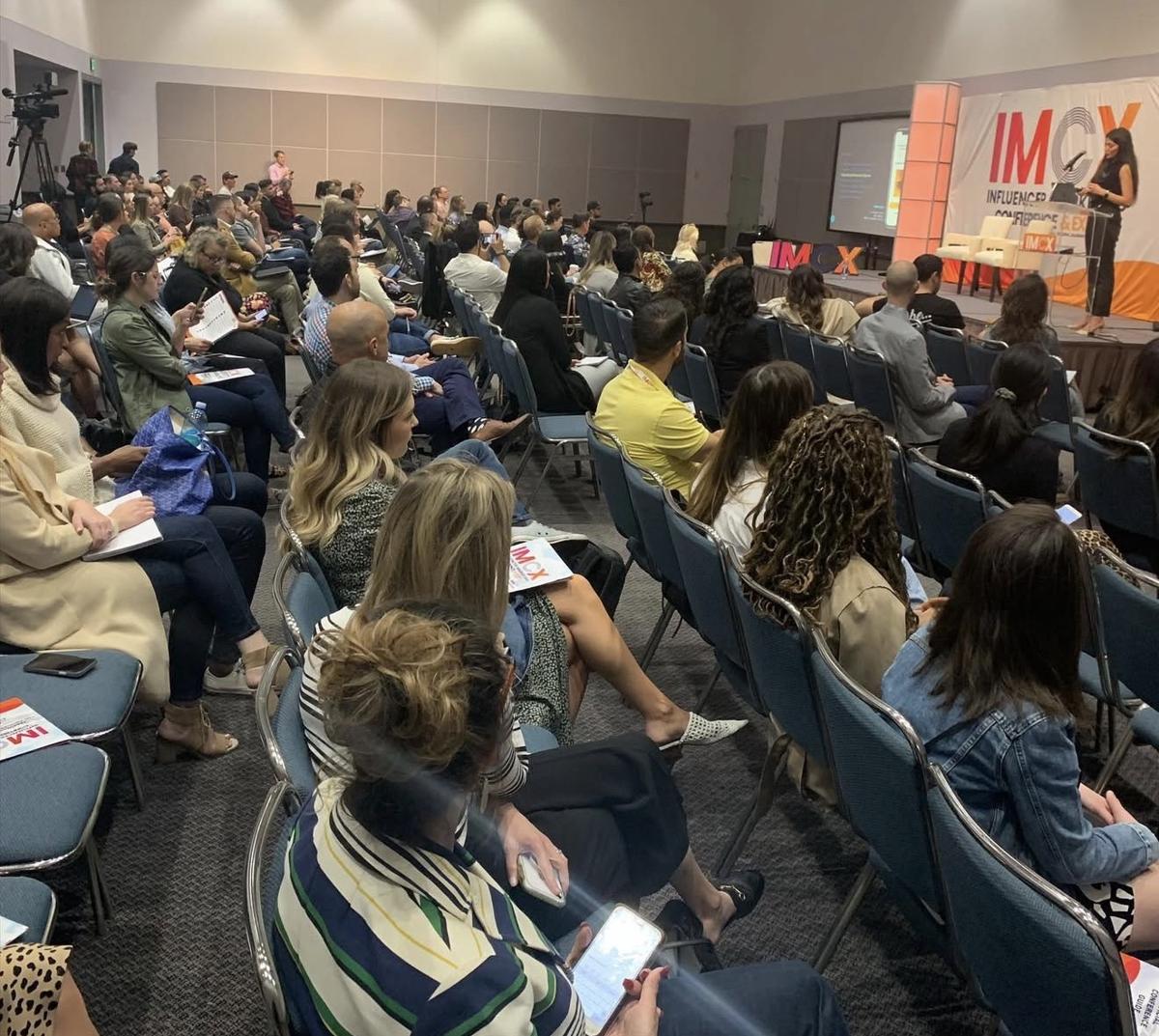
When the FTC sent its Western Region Director, Maricela Segura, to walk creators and brands through influencer disclosure rules at IMCX in Los Angeles, the room got quiet. The rules haven't moved much since. The enforcement has.

The Creator Economy
Editorial oversight by the Editor-in-Chief
# Watch: The FTC's Western Region Director Came to IMCX to Explain Influencer Disclosure. Six Years Later, Most Creators Still Get It Wrong.
In 2020, the Federal Trade Commission sent Maricela Segura — Regional Director of the agency's Western Region — to speak at IMCX in Los Angeles. After her presentation on stage, we pulled her into a backroom interview — and she walked us through the rules that govern paid endorsements on social media in more depth than the stage session allowed.
What's remarkable, six years later, is how little the rules themselves have changed and how much the enforcement environment has.
The core FTC requirement is unchanged: if you have a "material connection" to a brand — getting paid, getting free product, getting a discount in exchange for promotion — and you post about that brand, you have to disclose the connection clearly and conspicuously, in a way that's hard to miss. Not buried in hashtags. Not after a "more" tag. Not in tiny gray text on a dark background. Not in a separate post.
That requirement comes from the FTC's Endorsement Guides under 16 CFR Part 255, and the agency operationalizes it through the "Disclosures 101 for Social Media Influencers" document published in November 2019 — the document Segura covered at IMCX — first on stage, then in more detail in the interview below.
Most creators in 2020 thought they understood the rules. Most got the easy parts right. Some got the hard parts wrong. Six years and several enforcement actions later, the pattern hasn't fundamentally changed — but the consequences have.
What the FTC actually requires — the part most creators get right
The simple rule: if you got something from a brand in exchange for your post, say so, clearly, in language the average viewer would understand. The FTC has been explicit that these are acceptable when used unambiguously:
- "#ad"
- "#sponsored"
- "Paid partnership with [brand]"
And these are not acceptable on their own:
- "#thanks [brand]" (implies gratitude, not a paid relationship)
- "#sp" or "#spon" (too cryptic for the average viewer)
- "#partner" alone (ambiguous)
- "#collab" alone (ambiguous)
- "Thanks to [brand] for the product" without explicit disclosure of the relationship
- Tagging the brand alone without a disclosure phrase
This part most creators have absorbed. The standard disclosure shows up in roughly the right place. The brand is named. The relationship is acknowledged.
What the FTC actually requires — the part most creators get wrong
The clearer-and-more-conspicuous standard, in practice, has nuances most creators in 2020 didn't realize and many still don't in 2026:
**Disclosure must be in each post, not just in your bio.** A "this account contains paid promotions" disclosure in your Instagram bio doesn't satisfy the per-post requirement. The viewer landing on a single post must see the disclosure on that post.
**Disclosure must work for the viewer's actual experience.** If your post is a video and the disclosure only appears in the caption, viewers on autoplay-with-sound-off won't see it. Visual disclosure on the video itself is the safer move.
**The "above the fold" rule.** On Instagram, the first two lines of a caption show before "more." Disclosure has to be in those first two lines, not after the cut.
**On TikTok and Reels, disclosure must be in the video — visually — for at least three to five seconds.** A disclosure that flashes for one second isn't conspicuous. The Endorsement Guides require it to be hard to miss.
**Affiliate links require disclosure too.** "I'd never recommend a product I didn't love" is not a substitute for the fact that you earn commission if a reader clicks and buys.
**Free product is a material connection.** "They sent me this to try" is the disclosure. Not optional just because no cash changed hands.
**Family and friends count.** If you're employed by, related to, or otherwise materially connected to a brand, that connection has to be disclosed in any post promoting them.
What's changed since 2020
The FTC's rules haven't materially changed. The enforcement posture has. Three patterns worth knowing in 2026:
**The Endorsement Guides were revised in 2023.** The most consequential update broadened the definition of "endorser" to include virtual influencers and made platform liability more explicit. Brands that knowingly use undisclosed endorsements can be held accountable. So can platforms that fail to implement reasonable systems to detect and address them.
**The Civil Penalty Authority is now actively used.** Following the FTC's Notices of Penalty Offenses sent to hundreds of companies regarding deceptive endorsements, companies on the receiving list now face significant per-violation civil penalties — currently in the tens of thousands of dollars per post, adjusted upward annually for inflation — if they engage in the conduct the FTC has previously found to be unlawful.
**State enforcement is rising.** California, New York, and Washington have all initiated investigations or actions involving undisclosed influencer endorsements in recent quarters, often citing state-specific consumer protection statutes alongside FTC frameworks.
The practical impact: in 2020, the worst case for a creator with poor disclosure practices was a warning letter and reputational embarrassment. In 2026, the worst case is being named in a Civil Investigative Demand, paying fines, and being entered into a public FTC consent decree that follows the creator for years.
Watch the interview
The backroom interview with Maricela Segura, recorded at IMCX after her stage presentation, is above. It's a useful reset for any creator, brand, or agency operator working in influencer marketing today — the rules she walks through are still the rules, the examples she gives are still the examples, and the gap she identified between "what creators think disclosure means" and "what the FTC says disclosure means" is the same gap costing creators money in 2026.
What to do this week
- **Audit your last 30 posts.** Identify any that involve material connections (paid, free product, affiliate, family connection). Verify that disclosure was clear, conspicuous, and in the right place for the platform.
- **Update your standard contract terms** to require brands to confirm in writing whether the engagement is paid, gifted, or affiliate — and to require their pre-approval that your disclosure language meets FTC standards. Many disputes happen because the creator and brand disagree about what was promised after the post is live.
- **If you manage talent, document an internal disclosure policy.** Treat it like a compliance program. The FTC has been explicit that good-faith effort matters when enforcement decisions are made.
The rules aren't getting more complicated. The enforcement is getting more serious.
By The Creator Economy Editorial Team
Editorial oversight by Ismail Oyekan
Ismail Oyekan is the Editor-in-Chief of The Creator Economy and the founder of IMCX (Influencer Marketing Conference & Expo), the premier industry gathering connecting creators, brands, and capital. Named one of the 100 Most Influential People in Influencer Marketing by Influence Weekly, he has managed over $20 million in influencer marketing budgets and worked with A-list talent including Floyd Mayweather and DJ Khaled. He is a sought-after advisor to creator economy startups.