Arizona State Is Betting a Bachelor's Degree Can Manufacture Influencers. Here's the Case For and Against.
ASU just became the first major public university to offer a full bachelor's degree in becoming an influencer. It is either the moment the creator economy grew up, or the moment higher education started selling a dream it cannot underwrite. The honest answer is both.

The Creator Economy
Editorial oversight by the Editor-in-Chief
When Arizona State University's senate approved a Bachelor of Arts in Content Creation in March 2026, it did something no large public university had done before. It stopped treating influencing as a hobby students do between classes and started treating it as a profession worth four years and 120 credit hours. The program lives inside the Walter Cronkite School of Journalism and Mass Communication. It teaches video production, podcasting, audience analytics, personal branding, media law, and social strategy. Its most talked-about detail is the capstone requirement: students must build a real social media account and demonstrate measurable audience growth before they graduate. There is even a course titled How to Become an Influencer.
The reaction split instantly, and predictably. One camp sees a forward-looking institution finally meeting a 250 billion dollar industry where it lives. The other sees a respected journalism school charging tuition to teach something millions of teenagers already do for free. Both camps are partly right. The more useful exercise is to separate the signal from the noise, because ASU is not an outlier. It is the largest and most visible entry in a movement that has been building for years, and how this program performs will shape whether the rest of higher education follows or retreats.
The case for it
Start with the honest version of the bull case, because it is stronger than the skeptics admit.
The creator economy is not a fad, and pretending otherwise is its own kind of denial. Goldman Sachs projects it will reach roughly 480 billion dollars by 2027. More than 200 million people now earn some form of income through platforms like YouTube, TikTok, Instagram, and podcasts. Surveys consistently show that more than half of Gen Z aspires to a creator career, and that aspiration is not limited to the young. When a plurality of an entire generation names a field as its preferred profession, the argument that universities should ignore it becomes difficult to defend. Universities already train people for careers in film, in music, in professional sports, in advertising, all fields where the odds of stardom are long and the day-to-day work is craft. A degree that treats content creation the same way is not a category error. It is consistency.
The second point in its favor is that the ASU curriculum, read closely, is not actually a four-year course in going viral. The reading lists include media law, analytics, and the business mechanics of monetization, contracts, sponsorships, licensing, and audience data. Jessica Pucci, a senior associate dean at Cronkite, has been explicit that the degree is meant to go well beyond recording and uploading videos. That framing matters. The skills that separate a sustainable creator business from a lucky viral moment, understanding FTC disclosure rules, negotiating a brand deal, reading a media kit, building an owned audience you actually control, are teachable, and most self-taught creators learn them late, expensively, and by getting burned. A structured program that front-loads those competencies is doing something the algorithm cannot.
Third, the career outcomes are broader than the headline suggests. ASU lists content strategist, social media manager, brand storyteller, podcast producer, digital marketer, and communications specialist among the paths open to graduates. Every brand, agency, nonprofit, and media company on earth now needs people who understand how attention is built and monetized natively. A graduate who never amasses a personal following can still be extremely employable, because the underlying literacy, how platforms work, how audiences behave, how content converts, is exactly what employers are scrambling to hire for. Viewed that way, the degree is less a lottery ticket and more a modern communications major with a sharper edge.
The case against it
Now the honest version of the bear case, which the boosters wave away too quickly.
The first and hardest problem is that a university cannot teach the thing that actually matters. Audience is not a skill you acquire by completing coursework. It is a function of taste, timing, persistence, luck, and an ineffable ability to make strangers care, none of which appear on a syllabus. You can teach someone to edit a clean video, structure a hook, and read a retention graph, and they can still post into silence for four years. Film schools have lived with this tension forever, but film schools do not typically advertise, in their own program description, that you will graduate as an influencer. ASU's own marketing language, prepares you to become an influencer, sets an expectation the institution has no mechanism to guarantee. That gap between promise and deliverable is where the reputational risk lives.
The second problem is cost and opportunity. A creator can build an audience today with a phone, free editing software, and a point of view, at a marginal cost of roughly zero. Asking an 18-year-old to instead spend four years and tens of thousands of dollars in tuition to enter a field with a brutal power-law distribution, where a tiny fraction capture the vast majority of the income, invites a fair question: is the degree the efficient path, or is it the university monetizing a dream that students could pursue for free? The average influencer income figures that get cited, often around 90,000 dollars, are wildly misleading because they average across a population where the median earns close to nothing and a handful earn fortunes. A program that does not aggressively teach that reality risks selling optimism as curriculum.
The third problem is timing and durability. The creator economy is real, but it is also volatile in ways traditional professions are not. Platforms rise and collapse. Algorithms change overnight and erase business models with them. The specific tactics that work in 2026, the formats, the platforms, the monetization levers, may be obsolete by the time a freshman graduates in 2030. A degree structured around today's landscape risks teaching a snapshot of a moving target. The counterargument, that ASU is teaching durable principles rather than transient tactics, is only as good as the faculty's discipline in actually doing that, and that is difficult to verify from the outside.
This is not happening in a vacuum
What makes the ASU debate more than a local story is how much company the program already has, both across the United States and internationally. This is a global academic shift, not one school's experiment.
In the US alone, the University of Texas at San Antonio launched a Bachelor of Arts in Digital Media Influence in 2024. Saint Leo University offers a Digital Media Influencer specialization. Graceland University has a digital content creation major. Syracuse opened a Center for the Creator Economy and a content-creation minor. The University of Miami built a minor in Strategic Social Media Communication. Duke, Cornell, USC, Penn State, UCLA, and the University of Alabama all now run courses, clubs, or full programs in the space. USC's Annenberg school even threads the creator economy through its public relations master's. What ASU did was not invent the category. It scaled it, becoming the first major public university to put a full undergraduate degree behind it.
The international picture is arguably more instructive, because it shows the field maturing beyond the become-a-star framing. Ontario Tech University in Canada launched what it calls the country's first graduate degree dedicated to the creator economy, a Master of Social Media Communication in Online Creators, explicitly covering ethics, regulation, AI, and the critical analysis of platform systems alongside growth and monetization. Erasmus University Rotterdam's Master in Media and Creative Industries situates creator work inside the broader machinery of media systems and cultural production, deliberately not an influencer degree, and stronger for it. These programs are noteworthy because they treat influence as something to be studied and governed, not merely performed. They are training the people who will manage, regulate, and build the infrastructure of the creator economy, not just the people who hope to go viral within it.
That distinction, between programs that manufacture creators and programs that build the professional and ethical scaffolding around creation, is the one that will matter most over the next decade. The graduate-level and international programs are, on balance, making the more defensible bet.
The verdict
So which is it? Is ASU's degree the moment the creator economy earned its place in the academy, or the moment a university started selling a dream it cannot deliver?
The honest answer is that it is both, and which one wins depends entirely on execution. If ASU delivers on the durable-skills promise, if graduates leave with genuine fluency in analytics, law, business mechanics, and platform strategy, then it will have built a legitimate modern communications degree with unusually strong career optionality, and the personal-following question becomes secondary. If instead the program leans on the influencer fantasy in its marketing while under-delivering on the unglamorous fundamentals, it will produce a cohort of graduates who paid four years of tuition for skills they could have taught themselves, and the backlash will be earned.
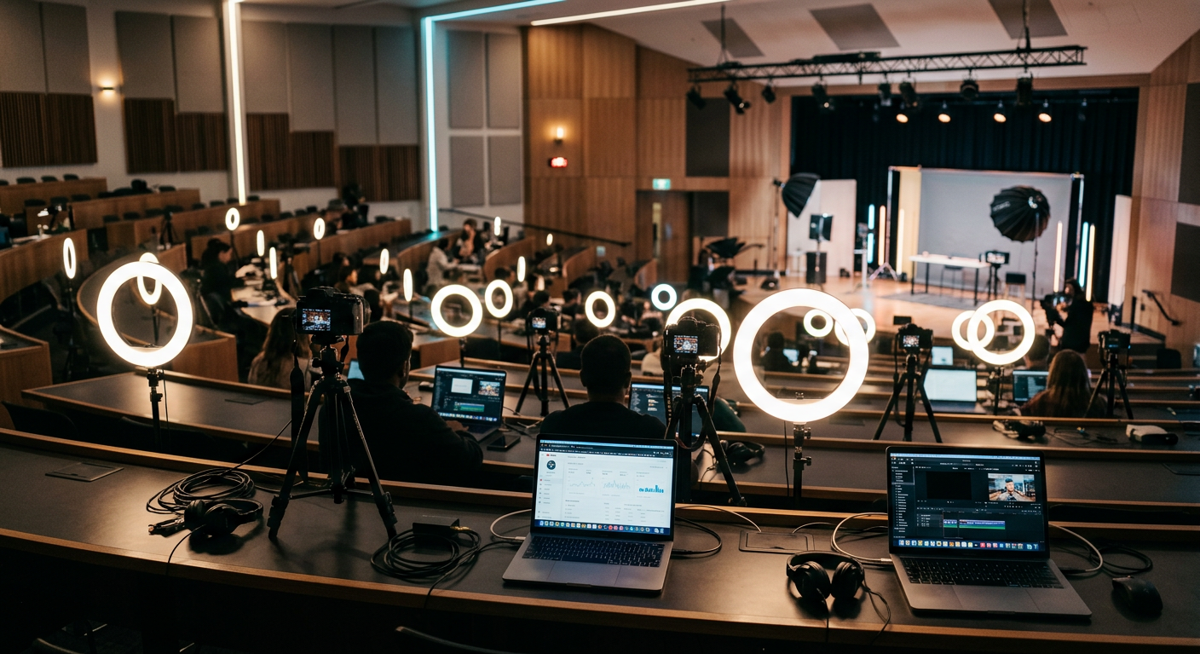
The creator economy is too large, too durable, and too economically significant for higher education to keep pretending it does not exist. On that point, ASU is simply ahead of the curve. The open question is not whether universities should teach this. It is whether they can teach it honestly, resisting the temptation to sell stardom while actually teaching the profession underneath it. That is a high bar. The programs that clear it will look, in hindsight, visionary. The ones that do not will look like they were selling ring lights and a dream.
The industry that these graduates are entering, brands, agencies, platforms, and the deal-makers who connect them, will be the ultimate judge. It always is.

By The Creator Economy Editorial Team
Editorial oversight by Ismail Oyekan
Ismail Oyekan is the Editor-in-Chief of The Creator Economy and the founder of IMCX (Influencer Marketing Conference & Expo), the premier industry gathering connecting creators, brands, and capital. Named one of the 100 Most Influential People in Influencer Marketing by Influence Weekly, he has managed over $20 million in influencer marketing budgets and worked with A-list talent including Floyd Mayweather and DJ Khaled. He is a sought-after advisor to creator economy startups.