TikTok Just Banned AI Voices on Shop Lives and Launched Symphony Agent for Brands. The Platform's Two-Track 2026 Strategy.
TikTok restricted AI on the creator-facing side while expanding it on the brand-facing side at Cannes Lions 2026. The contradiction is the strategy. Here is what each move means for creators, brands, and the broader AI-in-marketing arc.
The Creator Economy
Editorial oversight by the Editor-in-Chief
TikTok made two announcements in the same week that, on the surface, look contradictory. On the creator side, the platform banned AI-generated voices and pre-recorded audio in TikTok Shop Lives, requiring hosts to engage with viewers in real time during commerce streams. On the brand side, TikTok unveiled Symphony Agent at Cannes Lions 2026, an agentic AI system that generates entire TikTok-first ad campaigns from a creative brief. The same company tightening AI rules for the people selling on its platform while productizing AI for the people buying its ads is not actually contradictory. It is strategy.
For creators running monetized accounts, brand marketers buying TikTok inventory, and anyone tracking how platforms are dividing the AI conversation between creator-facing and advertiser-facing experiences, both announcements matter. Here is what each does and how they fit together.
What the TikTok Shop Lives AI restriction actually covers
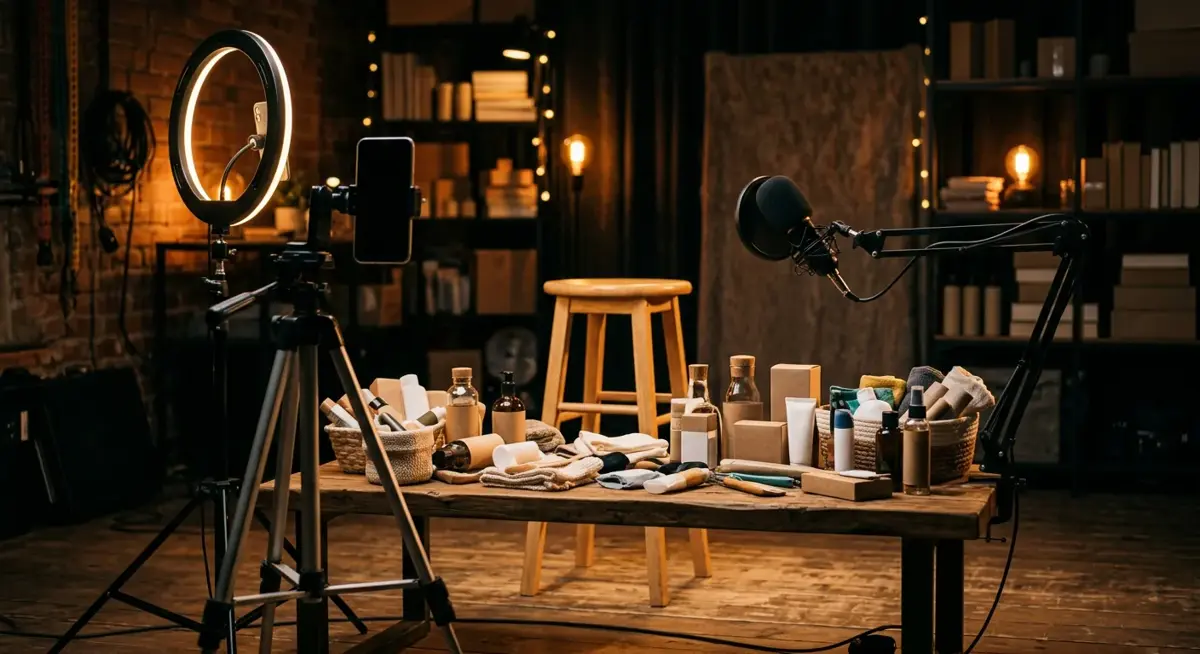
The new policy applies specifically to TikTok Shop Live streams, the commerce-focused live video format where creators sell products in real time. Under the updated rules, hosts cannot use AI-generated voices to narrate product features, cannot run pre-recorded audio to fake live engagement, and must respond to viewer questions and comments in real time during the stream. The change is enforced through TikTok Shop moderation and through automated detection of voice patterns that match AI synthesis signatures.
The reason TikTok is making this move now is straightforward. TikTok Shop has scaled to billions of dollars in annual GMV, and the live commerce format is responsible for a disproportionate share of that revenue. The format works because viewers believe they are watching a real human respond to questions and demonstrate products in the moment. AI-narrated streams running pre-recorded loops break that trust. A handful of fake-live streams getting flagged by users could undermine trust in the entire format, which would damage the channel TikTok has spent two years scaling.
This is the same dynamic that drove the New York S8420A AI synthetic performer disclosure law in advertising. Regulators forced disclosure on synthetic humans because audience trust was eroding faster than the underlying AI technology was improving. TikTok is doing the same thing voluntarily on its commerce surface, ahead of any regulator forcing the issue.
What Symphony Agent actually does
Symphony Agent, unveiled at Cannes Lions 2026, is TikTok''s agentic AI system for brand advertisers. Brand marketers input a creative brief (campaign objective, target audience, key messages, brand guidelines) and Symphony Agent generates a full TikTok-first ad campaign: scripts, visual concepts, suggested creator partners from TikTok''s creator marketplace, audience targeting parameters, and budget allocation across formats. The system is designed to reduce the time and creative agency cost of running TikTok-first campaigns from weeks to days.
The strategic logic for TikTok: most brand spend on TikTok still gets routed through traditional creative agencies that build TikTok content as a derivative of broader campaign work. The result is TikTok ads that look like TikTok ads only superficially. Symphony Agent gives brand marketers a path to generate native-feeling TikTok creative without going through an agency intermediary, which both lowers the friction of running TikTok-first campaigns and captures more of the production margin for TikTok''s own platform stack.
Why the two moves are not actually contradictory
The pattern becomes clear when you separate the creator surface from the brand surface. TikTok is restricting AI on creator-led commerce because authenticity is the thing creators sell, and AI undermines that sale. TikTok is expanding AI on brand-facing tools because efficiency is the thing brands buy, and AI accelerates that purchase.
This is the same dynamic playing out across major platforms in 2026. Meta is investing heavily in AI generation for advertisers while requiring labeling on AI content from creators. YouTube is rolling out AI-generated voiceover tools for creators while simultaneously restricting AI-generated copyright violations. The platforms have collectively figured out that creator authenticity is a feature their product depends on, while advertiser efficiency is a feature their revenue depends on. The two-track approach optimizes both.
For brands trying to navigate which AI tools to use where, the read is simple: AI in creative production for paid campaigns is now table stakes and getting more sophisticated fast. AI in organic creator content is now actively restricted in commerce contexts and increasingly regulated in advertising contexts. The two are headed in opposite directions, on purpose.
What this changes for creators and brands right now
For creators running TikTok Shop Lives or planning to: the format is now strictly real-time. No AI voice narration, no looped pre-recorded sequences, no automated host responses. The compliance burden is higher (you cannot pre-record and walk away) but the trust premium for human-led streams just increased, because the floor of competing AI-narrated content is being removed. Top-performing TikTok Shop hosts will likely see GMV per stream lift over the next 6 to 12 months as fake-live content gets filtered out.
For brand marketers: Symphony Agent and similar agentic AI tools from the major platforms (Meta''s, YouTube''s, LinkedIn''s equivalents) are now legitimate replacements for agency creative work on platform-specific campaigns. The cost savings are real and the output quality is reaching parity for most performance-marketing use cases. The creative agency relationship moves up the value chain toward strategy, brand positioning, and integrated multi-channel campaigns, while platform-native execution increasingly happens through agentic AI.
The bigger pattern: AI is being unbundled by use case
The TikTok announcements are a clean example of the broader unbundling of AI policy that the major platforms started in 2025 and is accelerating in 2026. Different AI use cases on the same platform now get different treatment. AI for advertiser efficiency is encouraged and increasingly subsidized through platform-built tools. AI for creator-led commerce is restricted to preserve audience trust. AI for content generation by random users is increasingly labeled or filtered. AI for personalized feed recommendations is invisibly woven into the underlying platform.
The implication for anyone building a creator economy business: the AI tools you can use depend entirely on which surface you are operating in. The same AI voice generation that is now banned in TikTok Shop Lives is fully supported in TikTok''s Symphony Agent for ad creative. Knowing where the policy lines fall, and updating your operating playbook as they shift, is now a real part of running a creator-facing business.
For more on how AI is reshaping the creator and brand economy, see our breakdown of AI influencers versus human creators. For the regulatory backdrop, see the New York S8420A disclosure law analysis.
Frequently asked questions
What did TikTok ban on Shop Lives?
AI-generated voices and pre-recorded audio. Hosts must now engage with viewers in real time during the stream, responding to questions and comments live rather than running automated or looped content.
What is TikTok Symphony Agent?
An agentic AI system for brand advertisers, unveiled at Cannes Lions 2026. Marketers input a creative brief and Symphony Agent generates a full TikTok-first ad campaign including scripts, visuals, suggested creator partners, targeting, and budget allocation.
Why are the two moves not contradictory?
TikTok restricts AI on creator-led commerce because authenticity is the thing creators sell. TikTok expands AI on brand-facing tools because efficiency is the thing brands buy. The two surfaces have different value propositions and now have different AI policies.
Does this affect TikTok creator monetization beyond Shop Lives?
Currently the restriction is specific to Shop Lives. Other TikTok creator content (regular videos, Lives that are not commerce-focused) is not yet covered by the AI voice ban, though similar policies likely expand to additional surfaces over the next 6 to 12 months.
How does this fit with broader platform AI policy trends?
It matches the two-track pattern across major platforms (Meta, YouTube, LinkedIn): expand AI for advertisers, restrict AI for creators, especially in trust-dependent contexts like commerce and endorsement. Authenticity is the product. Efficiency is the revenue. The platforms are protecting both by separating the policies.
By The Creator Economy Editorial Team
Editorial oversight by Ismail Oyekan
Ismail Oyekan is the Editor-in-Chief of The Creator Economy and the founder of IMCX (Influencer Marketing Conference & Expo), the premier industry gathering connecting creators, brands, and capital. Named one of the 100 Most Influential People in Influencer Marketing by Influence Weekly, he has managed over $20 million in influencer marketing budgets and worked with A-list talent including Floyd Mayweather and DJ Khaled. He is a sought-after advisor to creator economy startups.