AI and Influencers at IMCX 2026: Why Paid UGC May Disappear and What Disclosure Should Look Like
A panel moderated by Shira Lazar with Jesse Batres of Influential, Veronica del Nero of Rula and creator Rashad Little debated AI likeness deals, the future of UGC, and where AI disclosure lines should be drawn.

The Creator Economy
Editorial oversight by the Editor-in-Chief
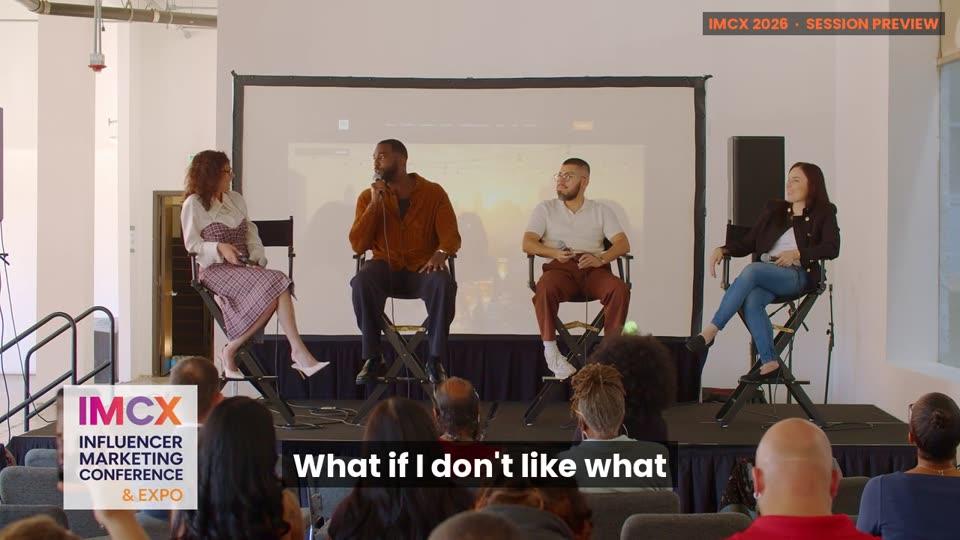
"How AI Is Impacting Influencers" was one of the liveliest panels at IMCX 2026 in Los Angeles. Moderated by Shira Lazar of What's Trending, it brought together Jesse Batres of Influential, Veronica del Nero of Rula and creator Rashad Little. The conversation covered AI likeness deals, which kinds of content AI will replace, and how disclosure should work.
Licensing your likeness: too risky?
One of the first flashpoints was whether creators should let companies use AI versions of them. One creator on the panel said no, at least for now. Giving a company control over "what looks like you" felt too risky, and so did losing control over the details. "What if I don't like the outfit? What if I don't like the fragrance they chose?" the creator said. "I have a lot of pride in what I've built over these eight years, and just to give that away, I don't think I'd be able to do that."
A two-tier creator economy is already here
The panel was asked whether the future will split into quality, human-made content on one side and fast, AI-powered content on the other. One panelist said that split is already happening, with clipping companies, UGC-focused shops and talent agencies for macro influencers each serving different parts of the market.
The sharper prediction was about UGC. "UGC, meaning that I'm paying talent to create content and not post, that is all going to be gone," the panelist said. "No one's going to pay for that." The reasoning: if a brand isn't buying the creator's audience, AI can increasingly produce that kind of content.
Brands care about authenticity, not a blanket AI ban
On contracts, panelists noted that most brand agreements are templated and not heavily filtered through AI today. From the brand side, the priority is that content feels authentic and hits the brief. One panelist said they would hesitate to put a blanket "no AI" rule in a brief, because AI can help creators edit, write a headline or refine their messaging. The line gets crossed, they said, if a brand starts to wonder whether "that's really his face."
Disclosure: a familiar principle, an unsettled practice
The panel agreed that transparency is the foundation of the industry, pointing to FTC rules for sponsored content. "Why is AI any different?" one panelist asked. If something could mislead a consumer, it should be disclosed.
Where they disagreed was on how far labels should go. One creator pushed back on AI labels being triggered by routine edits, like removing a background in Canva. Disclosure should be for things that might make someone believe something is real when it isn't, the creator argued, not for standard editing tools that already use AI under the hood.
The takeaways
- Think carefully before licensing your likeness for AI content, especially control over how it's used
- Expect paid UGC without distribution to come under pressure from AI
- Brands want authenticity and results, not necessarily zero AI
- Disclose anything that could mislead, but expect the rules for routine edits to keep evolving
**Watch the 1-minute preview** of this panel, and every IMCX 2026 session, at [influencermarketingexpo.com/sessions](https://influencermarketingexpo.com/sessions/). IMCX returns to Los Angeles on May 19-20, 2027, and [free registration is now open](https://influencermarketingexpo.com/tickets/).
By The Creator Economy Editorial Team
Editorial oversight by Ismail Oyekan
Ismail Oyekan is the Editor-in-Chief of The Creator Economy and the founder of IMCX (Influencer Marketing Conference & Expo), the premier industry gathering connecting creators, brands, and capital. Named one of the 100 Most Influential People in Influencer Marketing by Influence Weekly, he has managed over $20 million in influencer marketing budgets and worked with A-list talent including Floyd Mayweather and DJ Khaled. He is a sought-after advisor to creator economy startups.