Accenture Just Acquired Whalar in What May Be the Largest Creator Economy Deal Ever. The Enterprise Consolidation Wave Has Started.
Accenture Song has agreed to acquire creator agency Whalar, a deal Whalar leadership called the largest creator-economy transaction to date. Combined with the CAA and TPG Compound Creative launch, the consolidation cycle is now moving on two fronts.

The Creator Economy
Editorial oversight by the Editor-in-Chief
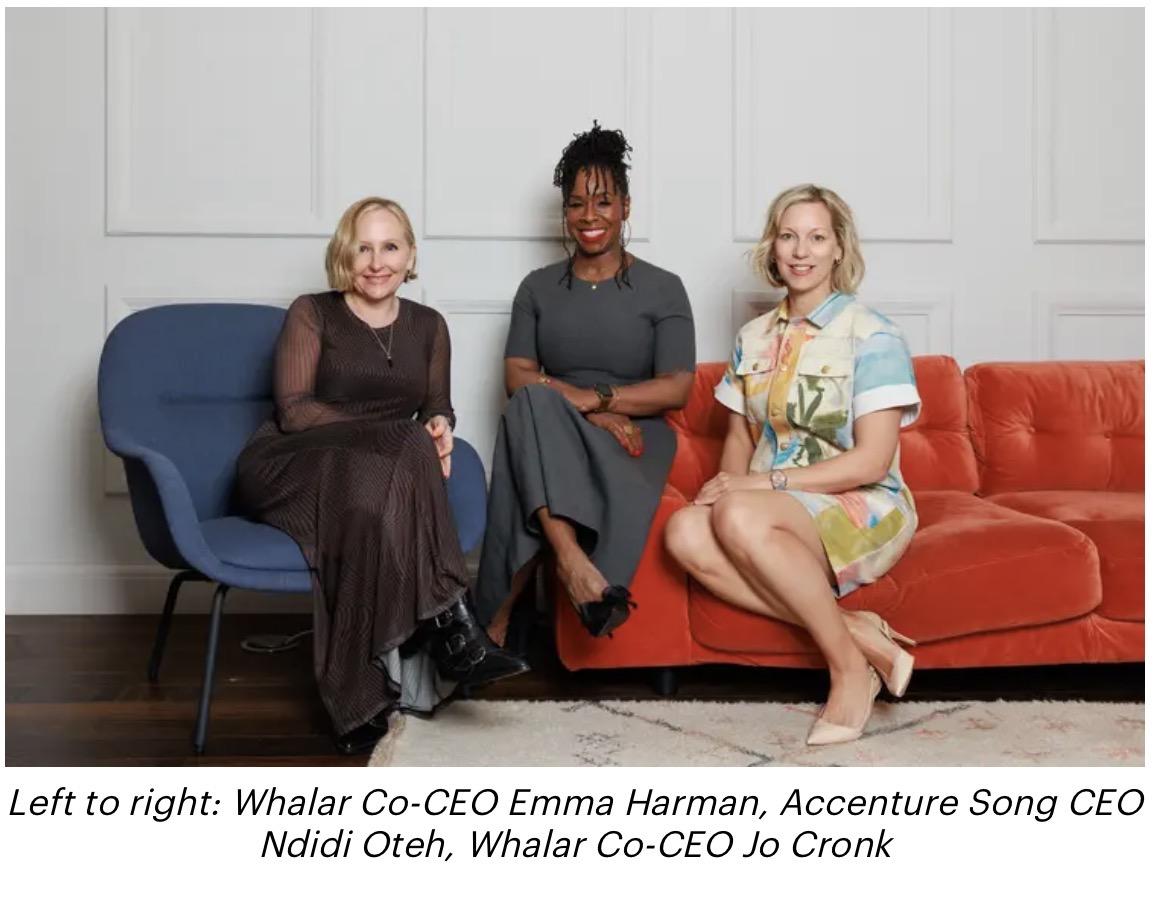
Accenture Song, the marketing services arm of Accenture, has agreed to acquire creator agency Whalar in what Whalar''s own leadership has called the largest creator-economy transaction to date. The deal follows the earlier announcement of Compound Creative, the CAA plus TPG $250 million holding company built for creator-economy roll-ups, and confirms that the consolidation cycle for the category is now moving on two distinct fronts: an agency-and-PE roll-up path (Compound Creative) and an enterprise-marketing-services path (Accenture Song plus Whalar).
For anyone running a creator-economy business, the pattern is now unmistakable. Category-specific institutional buyers are actively in market, and the price discovery on creator-economy businesses is happening in real time.
Why Accenture wanted Whalar specifically
Whalar built one of the most professionally operated creator agencies in the market over the past decade. The business runs across multiple offices, represents talent across the top tiers of the creator marketplace, and generates recurring revenue from Fortune 500 brand relationships that treat Whalar as their creator-strategy partner rather than a project-based vendor. That combination (talent depth, brand-side account relationships, recurring revenue, multi-office operating footprint) is exactly the profile a professional services firm like Accenture Song can plug into its existing global marketing services stack.
The strategic logic on Accenture''s side is clear. Accenture Song serves large enterprise brands on integrated marketing, digital transformation, and campaign execution. Those same brands are increasingly asking for creator-marketing capabilities to be a native part of the integrated offering, not a bolt-on from a separate agency. Rather than build creator capabilities from scratch, Accenture buys Whalar''s existing operation and integrates it into the Song offering, immediately adding creator marketing as a first-class capability across Accenture''s enterprise client base.
Why Whalar sold now
Whalar''s leadership has publicly framed the deal as the largest creator-economy transaction to date, which means the exit multiple was materially favorable to the sellers. That framing itself is worth reading carefully. Sellers publicly praising an acquisition price usually signals that the deal cleared the internal bar the founders and investors set, and that the acquisition unlocks growth capital and enterprise infrastructure that Whalar could not have built independently at the same pace.
The timing also matters. Whalar sold at a moment when creator-economy valuations are elevated (following the $314 billion valuation inflection), category-specific buyers are actively in market (Compound Creative launched days before the Whalar deal was announced), and the operating headwinds for independent creator agencies are real (platform-driven margin compression, rising talent costs, longer brand-side sales cycles). Selling into a peak valuation window to a well-capitalized enterprise buyer is textbook exit timing.
What this signals for other creator agencies
Three implications for the rest of the creator-agency landscape.
First, the M&A market for creator agencies just repriced. Every remaining independent creator agency of scale (Viral Nation, Studio71, Open Influence, Captiv8, Neoreach, and dozens of others) now has a clear comp set for what a professionally operated creator agency sells for. Owners who were previously debating whether to sell now have a market-clearing price to negotiate against. Expect additional agency sales to be announced in the next 6 to 12 months.
Second, the buyer universe just expanded. Before the Whalar deal, the assumed acquirers for creator agencies were either PE roll-ups (Compound Creative model), advertising holdcos (WPP, Publicis, Interpublic), or media companies. Accenture Song, McKinsey, Deloitte Digital, and other professional services firms with marketing capabilities are now confirmed acquirers. That widens the addressable buyer pool meaningfully and pushes valuations upward through competitive dynamics.
Third, the operating benchmark just shifted. Creator agencies that want to be attractive to enterprise professional-services acquirers need to demonstrate clean financials, recurring revenue, multi-office scale, and brand-side relationships that translate to the acquirer''s existing enterprise client base. The independently owned "lifestyle agency" (small, founder-run, project-based) is not the acquisition profile. The professionally operated agency with real operational depth is.
What this signals for creator-economy businesses beyond agencies
The pattern extending beyond agencies is worth naming. Enterprise professional services firms buying creator agencies means the same acquirers are potential buyers for creator-tools SaaS, creator-led brand businesses, and creator-adjacent marketing technology companies. If Accenture Song is buying creator capability through Whalar, it will also buy creator-tools infrastructure, creator-analytics platforms, and creator-commerce technology as the offering matures.
For founders of creator-tools companies, creator-led brands, and creator-adjacent technology businesses, the practical implication is the same as for agency owners: the buyer universe is larger than it appears, the valuations are being set right now, and the founders who build toward acquirability capture premium multiples in the first 12 to 18 months of any consolidation cycle.
The macro picture
Two major creator-economy consolidation vehicles announced within the same month (Compound Creative, then Accenture plus Whalar) is not coincidence. It is the start of the consolidation cycle that always follows a period of fragmented category growth. The venture-funded expansion phase of the creator economy created hundreds of independently operated businesses across agencies, tools, and creator-led brands. The consolidation phase compresses those hundreds of operators into a smaller number of category-scale operating companies that can produce predictable cash flow, public-market comparables, and institutional-grade financial reporting.
The next 24 months will determine which businesses become the consolidators and which businesses get acquired. The founders who understand which side they are on and structure their operations accordingly will capture the value. The founders who wait to figure it out will discover the market has moved past them.
For coverage of the individual creators driving the category''s revenue, see the Forbes Top Creators 2026 list. For the broader macro context, see the creator revenue securitization report.
Frequently asked questions
What did Accenture acquire?
Accenture Song, the marketing services arm of Accenture, agreed to acquire Whalar, a global creator agency. Whalar''s leadership has publicly called it the largest creator-economy transaction to date.
Why does this deal matter?
It confirms that enterprise professional services firms are active acquirers of creator-economy businesses, expanding the buyer universe well beyond PE roll-ups and traditional media holdcos. The deal establishes a price comp for other creator agencies and accelerates the consolidation cycle.
How does this relate to the Compound Creative announcement?
Both deals were announced within weeks of each other and confirm that the creator-economy consolidation cycle is now moving on two fronts: agency-and-PE roll-ups (Compound Creative) and enterprise-marketing-services acquisitions (Accenture plus Whalar). The buyer universe for creator businesses is expanding rapidly.
What kinds of creator businesses become likely acquisition targets?
Professionally operated creator agencies with recurring revenue and brand-side relationships, creator-tools SaaS companies in the $5 million to $25 million ARR range, creator-led consumer brand businesses doing $20 million to $100 million in revenue, and creator-adjacent marketing technology companies.
Should creator-agency owners consider selling now?
Owners considering a sale in the next 24 to 36 months should evaluate whether accelerating that timeline captures a favorable position in the first wave of consolidation multiples, which historically compress as competition for assets increases. The advice depends on the individual business, but the general pattern is that first-wave sellers in category consolidation cycles capture the highest multiples.

By The Creator Economy Editorial Team
Editorial oversight by Ismail Oyekan
Ismail Oyekan is the Editor-in-Chief of The Creator Economy and the founder of IMCX (Influencer Marketing Conference & Expo), the premier industry gathering connecting creators, brands, and capital. Named one of the 100 Most Influential People in Influencer Marketing by Influence Weekly, he has managed over $20 million in influencer marketing budgets and worked with A-list talent including Floyd Mayweather and DJ Khaled. He is a sought-after advisor to creator economy startups.